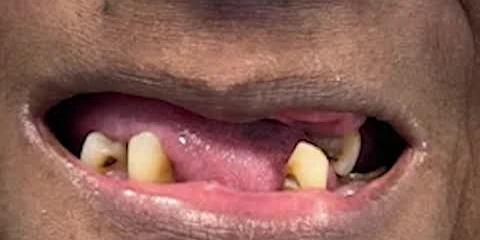
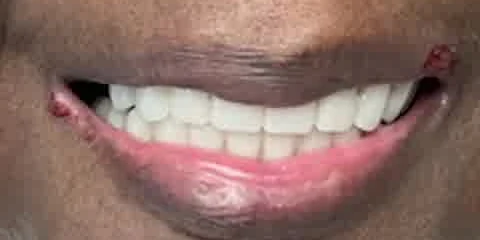
If you're losing teeth faster than they can be fixed, or you're living with a denture you don't trust, full-arch implants can give you a complete set of fixed teeth again. This page walks through what the treatment is, who it suits, what the visits look like, and what life is like afterward.
What a full-arch implant bridge is
A full-arch bridge is one custom piece holding a whole row of teeth, usually ten to fourteen. It screws onto a few implants in your jaw, typically four to six. The implants are small posts that fuse with the bone and do the job tooth roots used to do. Because the bridge is fixed, it stays in all day and night. You brush it like teeth, and our team takes it off only at cleaning and check-up visits.
You'll see this treatment called full-mouth implants, All-on-4 or All-on-X, a hybrid bridge, or fixed implant dentures. The names differ, but the idea is the same.
Who it's for
- People with many failing teeth in one or both jaws: loose, cracked, badly decayed, or affected by gum disease
- Denture wearers who are done with adhesive, sore spots and slipping
- People with a mix of old crowns, bridges and root canals that keep breaking down
- People who want one clear plan instead of years of tooth-by-tooth repairs
Age alone isn't a barrier. We look at your general health, your medicines, your bone and your habits. If you've been told you don't have enough bone, don't assume you're out of options. Angled implants, bone grafting and sinus lifts exist for exactly that situation.
How we plan your new teeth
Everything starts with a consultation and a 3D scan. The scan shows the height and width of your bone, where the sinus and nerves are, and where the implants can go. We also talk about how you want your teeth to look: their length, shape and shade, and how much they show when you smile.
From there, you get a written plan. It covers which teeth come out, how many implants each arch needs, which sedation you'll have, whether same-day teeth are realistic for you, the timeline, and the full cost.
Surgery day
Each arch is one long visit. We numb the area completely, and many full-arch patients choose IV sedation. We remove any remaining teeth, clean out infection, shape the bone where needed and place the implants. When they're firmly anchored, we attach a fixed temporary bridge the same day. That's what people mean by teeth in a day.
If the implants aren't stable enough on that first day, we don't force it. You'd wear a temporary while they heal, and we attach fixed teeth once it's safe.
Healing and your final bridge
The first week brings swelling and soreness, which usually peaks around day two or three. You'll eat soft foods for the first couple of months while the implants fuse with the bone. We see you for checks along the way. Once healing is complete, usually a few months after surgery, we take new scans, do a try-in so you can see and feel the teeth, and then deliver your final, stronger bridge.
Living with full-arch implants
Day to day, you brush twice a day and clean under the bridge with a water flosser. Regular cleanings matter more with implants, not less: they're how we catch inflammation early and check that the screws and bite are right. If you clench or grind, a night guard protects your investment.
How it compares with a denture
A denture rests on the gums and depends on suction or adhesive. An implant bridge is anchored in bone. That means much stronger chewing, nothing covering the roof of your mouth, and no taking teeth out at night. The trade-offs are surgery and a higher upfront cost. For some people, a snap-in overdenture on two to four implants is a good middle ground. We'll talk through all three options with you.
Cost
The cost depends on how many arches, how many implants, extractions, grafting, sedation and the bridge material. We don't guess at a number before your scan. Your written plan shows it all, and monthly payment plans are available through Cherry. See cost and financing.
 Advanced Dental Care of NYC